


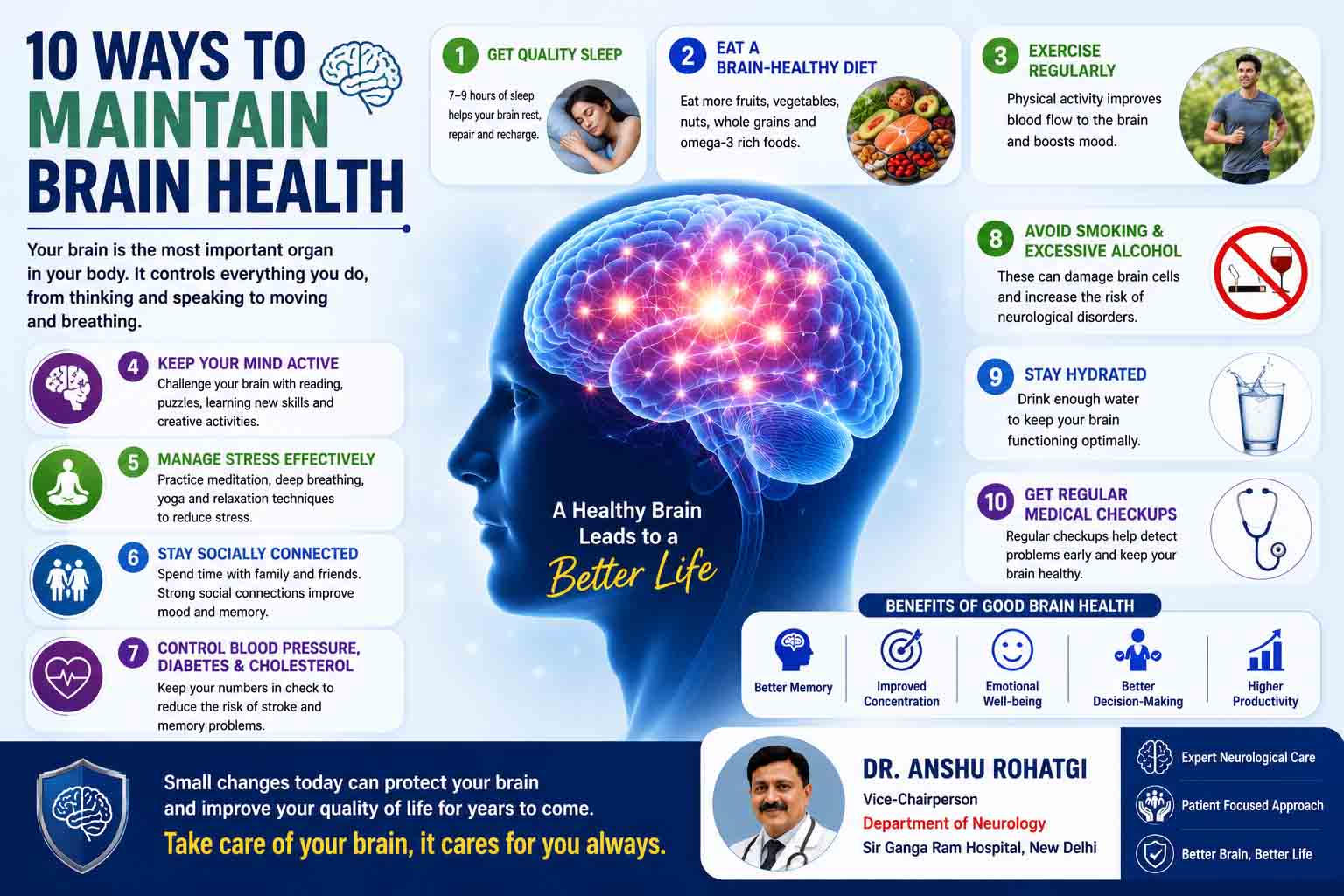
10 Ways to Maintain Brain Health
Your brain is the most important organ in your body. It controls everything you do—from thinking, speaking, and learning to moving, breathing, and remembering. Just like the heart and other organs, the brain also needs proper care to function efficiently throughout life.
In today’s busy lifestyle, stress, poor sleep, unhealthy eating habits, and lack of physical activity can negatively affect brain health. The good news is that simple lifestyle changes can help keep your brain active, healthy, and sharp for years to come.
Here are 10 effective ways to maintain good brain health.
1. Get Quality Sleep
Sleep is essential for brain function and memory. During sleep, the brain repairs itself, processes information, and removes harmful toxins.
Adults should aim for 7–9 hours of quality sleep every night.
Poor Sleep May Cause:
- Memory problems
- Difficulty concentrating
- Mood changes
- Fatigue
- Reduced mental performance
Maintaining a regular sleep schedule is important for long-term brain health.
2. Eat a Brain-Healthy Diet
A balanced and nutritious diet supports brain function and protects brain cells.
Foods Beneficial for Brain Health Include:
- Green leafy vegetables
- Fruits and berries
- Nuts and seeds
- Fish rich in omega-3 fatty acids
- Whole grains
- Healthy fats
Avoid excessive junk food, sugary beverages, and processed foods.
3. Exercise Regularly
Physical activity improves blood circulation to the brain and supports healthy nerve function.
Benefits of Exercise for the Brain:
- Improves memory and focus
- Reduces stress
- Enhances mood
- Lowers stroke risk
- Supports healthy aging
Even 30 minutes of walking or light exercise daily can benefit brain health.
4. Keep Your Mind Active
Mental stimulation helps keep the brain sharp and improves cognitive function.
Brain-Boosting Activities:
- Reading
- Solving puzzles
- Learning new skills
- Playing strategy games
- Writing or creative activities
Continuous learning supports better memory and mental agility.
5. Manage Stress Effectively
Chronic stress can negatively affect brain cells and mental well-being.
Healthy Stress Management Techniques:
- Meditation
- Deep breathing exercises
- Yoga
- Spending time with family
- Relaxation activities
Managing stress improves emotional and neurological health.
6. Stay Socially Connected
Regular social interaction helps maintain emotional balance and cognitive function.
People who stay socially active often experience:
- Better mental health
- Reduced stress
- Lower risk of depression
- Improved memory
Maintaining healthy relationships is important for overall brain wellness.
7. Control Blood Pressure, Diabetes & Cholesterol
Medical conditions such as hypertension, diabetes, and high cholesterol can damage blood vessels supplying the brain.
Poorly controlled health conditions increase the risk of:
- Stroke
- Memory decline
- Dementia
Regular health checkups and proper medical management are essential.
8. Avoid Smoking & Excessive Alcohol
Smoking and excessive alcohol intake can damage brain cells and reduce blood flow to the brain.
Quitting Smoking Helps:
- Improve circulation
- Reduce stroke risk
- Protect memory and concentration
Limiting alcohol also supports better brain function.
9. Stay Hydrated
The brain requires proper hydration to function effectively. Even mild dehydration can affect concentration, mood, and memory.
Tips:
- Drink enough water throughout the day
- Limit excessive caffeinated drinks
- Increase fluid intake during hot weather
Hydration helps maintain mental clarity and focus.
10. Get Regular Medical Checkups
Regular medical evaluations help detect neurological and health problems early.
Consult a specialist if you experience:
- Frequent headaches
- Memory problems
- Dizziness
- Sleep disturbances
- Weakness or numbness
- Difficulty concentrating
Early diagnosis and treatment can prevent serious neurological complications.
Why Brain Health Matters
Good brain health helps improve:
- Memory
- Concentration
- Decision-making
- Emotional well-being
- Productivity
- Quality of life
Protecting brain health is important at every stage of life.
Expert Neurological Care by Dr. Anshu Rohatgi
Dr. Anshu Rohatgi is a highly experienced neurologist in Delhi specializing in stroke, epilepsy, migraines, sleep disorders, movement disorders, and comprehensive neurological care. With decades of expertise in advanced neurological diagnosis and treatment, he provides patient-focused care aimed at long-term brain wellness and improved quality of life.
Conclusion
Maintaining brain health is essential for a healthy and active life. Simple lifestyle habits such as proper sleep, healthy eating, regular exercise, stress management, and timely medical care can significantly improve brain function and reduce the risk of neurological disorders.